Vampire Lifemate Bond
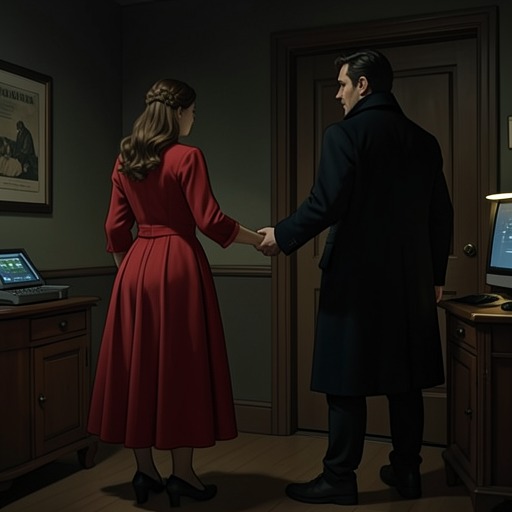
The Vampire Prince’s BrideThe Vampire Lifemate Bond is the supernatural and social mechanism by which vampires identify a suitable lifelong partner. It is not merely a romantic preference: the bond informs the selection of mates, places chosen partners within royal and clan structures, and can transform an outsider into a politically consequential spouse. The narrative presents it as an inherited vampire ability, but repeatedly complicates that biological boundary by showing that a human can answer its pull and participate in the relationship it creates.
Definition and Recognition
Vampires are described as possessing an innate ability from birth to sense potential mates and determine whether those individuals are suitable as lifemates. The ability is instinctive rather than learned, and it gives vampire attraction a perceptual dimension unavailable to humans in the same form. Matheus explains that vampires can recognize a potential mate and assess suitability for a life-mate relationship, making the bond both emotional and evaluative: it identifies desire while also implying fitness for a shared future.
The distinction between a potential mate and an established lifemate matters. A vampire may encounter people who could be placed within a harem, but the bond points toward a singular partner capable of becoming a true companion in rule and life. The system therefore stands in tension with the aristocratic harem practice described elsewhere in the vampire world, where powerful men keep multiple women as displays of wealth and authority. Jennifer Lindgern openly treats women as possible selections for her son Matheus, intending the unsuccessful candidates to remain in his harem for his use. Against that commodifying structure, the lifemate bond suggests a relationship with a different status: not an interchangeable possession, but a person recognized as uniquely suitable.
The Draco’s Eye and Destined-Mate Knowledge
The bond can also be confirmed through a hereditary object. When Darilth gives Ella the silver band bearing the large blue stone, the band contracts to fit her wrist and the stone shines bright blue. He identifies the object as the Draco’s Eye and explains that, as heir to the Rothgar throne, he is its bearer. When he first saw Ella on Earth, the stone revealed that she was his destined mate. The scene links dynastic authority, supernatural recognition, and physical transformation: the object does not merely symbolize the bond, but visibly responds to Ella.
Darilth’s explanation makes mate recognition part of royal succession rather than a private sentiment alone. The heir’s destined partner becomes relevant to the future of the Rothgar throne, so the bond carries consequences beyond the couple. The Draco’s Eye provides an external sign for what might otherwise remain an inward certainty, turning a personal encounter into evidence with political weight.
Human Participation and Mutuality
The relationship between Matheus and Alice tests the assumption that the bond belongs exclusively to vampires. Matheus tells Alice that she cannot sense the bond in the same innate way because she is not a vampire. Yet Alice admits that she has felt something strange between them. She refuses to accept without question that they are magically fated, but she acknowledges that the connection is real enough to demand investigation. Her response preserves her agency: the vampire may possess the inherited capacity, but Alice decides whether the unexplained attraction deserves trust.
Their physical responses make the bond legible before either character can fully define it. Alice’s heart flutters when Matheus meets her gaze, and a kiss that should have been repellent because of the blood on his breath instead becomes intoxicating. The narrative treats this bodily intensity as evidence of connection while leaving room for uncertainty about its source. Alice wonders whether ancient magic may tie them together, more powerful than the magic she has studied, and chooses to let Matheus closer in order to learn what the connection means.
Matheus’s attraction is not presented as based only on appearance or political convenience. He praises Alice as beautiful, intelligent, strong, and powerful, and says he would gladly rule beside her because she would care for his country. When she challenges that as insufficient grounds for marriage, he distinguishes practical admiration from the deeper reason he wants her as his lifemate: his vampiric nature recognizes her as suitable. The bond therefore combines instinct with a consciously articulated judgment of character and capability.
Royal Consequences and Pregnancy
Once Matheus takes Alice as his mate, the bond changes her public position. She becomes the standing queen, officially occupying that role despite not being a vampire. This is a major institutional consequence: the bond crosses species boundaries and gives a human woman access to a position previously held by vampires. Alice must then participate in the daily politics of the court and receive visiting lords, showing that becoming a lifemate is also an accession into obligations of governance.
The relationship produces an even more disruptive consequence when Alice becomes pregnant after two months together. Her tenderness, unpredictable moods, and missed menstrual cycle reveal that the union has created a child, despite the biological and political difference between the partners. Alice fears that the vampire court will reject both her and the pregnancy, and she considers concealing the child for its safety. Matheus instead argues that secrecy would intensify the danger: the court must be eased into the change so that the unexpected birth does not provoke revolt.
The pregnancy demonstrates that the bond is not confined to emotional recognition. It can reorganize succession, expose the limits of vampire custom, and make the human partner a biological and political intermediary between species. Alice’s position as a non-vampire queen and mother of Matheus’s child threatens established expectations, while Matheus’s response treats public adaptation rather than concealment as the necessary strategy.
Social Tension and Narrative Significance
The Vampire Lifemate Bond operates within a society that does not automatically respect the person chosen by it. Jennifer’s search for a mate for Matheus reduces women to candidates for selection, and the harem system makes the unchosen into possessions. Alice’s resistance to that practice is therefore central to the bond’s meaning. She refuses to let vampire nobles treat women under her protection as resources for a ruler’s pleasure, even while she herself is drawn into a relationship with the ruler’s son.
The bond also creates a contrast between inherited certainty and chosen commitment. Matheus can sense suitability by nature, but Alice must interpret unfamiliar feelings, resist the pressure of vampire custom, and decide whether to trust him. Her acceptance is not instantaneous obedience to destiny; it develops through skepticism, bodily recognition, conversation, and willingness to test the connection. In this way, the bond supplies the story with a supernatural premise while the characters’ choices determine whether that premise becomes a durable partnership.
At its broadest, the bond is a device for redrawing boundaries: vampire and human, private desire and public office, instinct and consent, romance and dynastic succession. The Draco’s Eye gives one version of the bond an objective sign, while Alice’s experience with Matheus shows that mutuality cannot be reduced to a vampire’s perception. Its decisive significance lies in how it converts attraction into a structure of belonging—and then forces that structure to accommodate a human queen, an interspecies pregnancy, and a court resistant to change.